What should be decided before
brand design begins
Before colours, typography, or logo directions are explored, a few business decisions need to be clear enough to guide the design.
Published
September 3, 2026
Author
Brand design becomes harder when it is expected to answer questions the business has not decided yet.
Who are we trying to reach?
What do we want to be known for?
What is changing?
What should stay?
What makes this business different?
What does the new identity actually need to work across?
Those questions are not visual questions, but they shape almost every visual decision that follows.
This does not mean a business needs a perfect strategy document before design can begin.
It means the project needs enough clarity to give the design a direction.
Start with what is actually changing
A branding project should begin with a reason.
- The business has outgrown an identity created when it first launched
- Several parts of the company now communicate differently
- The offer or audience has changed
- The business is moving into a new market
- Nothing is fundamentally wrong with the identity, but the system is too limited for what the company now needs to produce
These are different problems, and they should not automatically lead to the same design solution. A useful first question is:
What needs to be different when this project is finished?
Without that answer, a redesign can become change for the sake of change. The signals above matter most here for deciding between strategy and identity work, not as a full rebrand diagnosis on their own.
Be clear about who the brand needs to communicate with
“Everyone” is not useful design direction.
Different audiences notice different information, use different channels, and need different levels of explanation.
A business selling directly to consumers may need its identity to work hard in packaging, ecommerce, advertising, and social content.
A professional service business may depend more heavily on its website, proposals, presentations, reports, and sales material.
The identity should be built for the places the business actually needs to communicate.
That requires knowing who those communications are for.
Positioning needs to be clear enough to design from
Visual identity cannot decide what the business wants to mean.
It can express and reinforce a position, but there needs to be something to express.
Before design begins, it should be possible to explain:
- what the business offers
- who it is primarily for
- what makes the offer relevant
- how it wants to be understood in relation to alternatives
- what it should not be confused with
The wording does not need to be permanent.
But if several stakeholders give completely different answers, the disagreement will eventually appear in the design review.
One person will want the identity to feel established.
Another will want it to feel disruptive.
Another will want it to resemble the market leader.
The visual disagreement is often revealing an unresolved strategic one.
Look at competitors to understand the category, not to copy it
Competitor review is useful for identifying patterns.
What does almost everyone in the category look like?
Which colours dominate?
Which visual conventions help customers recognise the category?
Where has sameness become a problem?
The objective is not to produce the opposite of whatever competitors are doing.
It is to understand which conventions are useful and where the business has room to make a more distinctive choice.
Decide what existing equity deserves to stay
A rebrand does not need to erase the past.
An existing colour may already be strongly associated with the company.
A symbol may still work.
A particular piece of language may be valuable.
Customers may already recognise important parts of the current identity.
Before replacing everything, identify what still deserves to survive.
The question is not simply:
“What looks old?”
It is:
“What is no longer helping us, and what still has value?”
That leads to a more deliberate redesign.
Know what the identity needs to handle
A logo presentation can look convincing while hiding a practical problem: the identity has not been tested against the real work the business needs to produce.
Before design begins, list the priority applications.
For example:
- website
- ecommerce
- packaging
- proposals
- presentations
- reports
- signage
- social media
- advertising
- event materials
- sales collateral
The system does not need every possible application designed during the project.
But the designer needs to understand the environments the identity will eventually enter.
A system for a packaging-heavy business may need different strengths from one designed primarily for reports and presentations.
Define what success means without inventing a metric
Not every branding objective needs to be translated into a revenue promise.
Some outcomes can be assessed more directly.
For example:
- a clearer visual hierarchy
- one coherent identity instead of several inconsistent versions
- usable logo variations
- defined colour and typography rules
- guidelines other people can follow
- enough flexibility for the main business applications
- fewer design decisions being reinvented every time something new is created
Those are tangible things a brand identity project can actually deliver.
Strategy should reduce arbitrary design decisions
The purpose of the work before design is not to delay the creative part. This is what brand strategy actually does: it removes the guesswork before a single visual decision gets made.
It is to make the creative decisions less arbitrary.
A clear audience gives context.
A clear position gives direction.
A competitor review shows the category.
Existing equity shows what should be preserved.
Real applications show what the system needs to survive.
Then the design can be judged against something more useful than personal preference.
That is why my own process moves through:
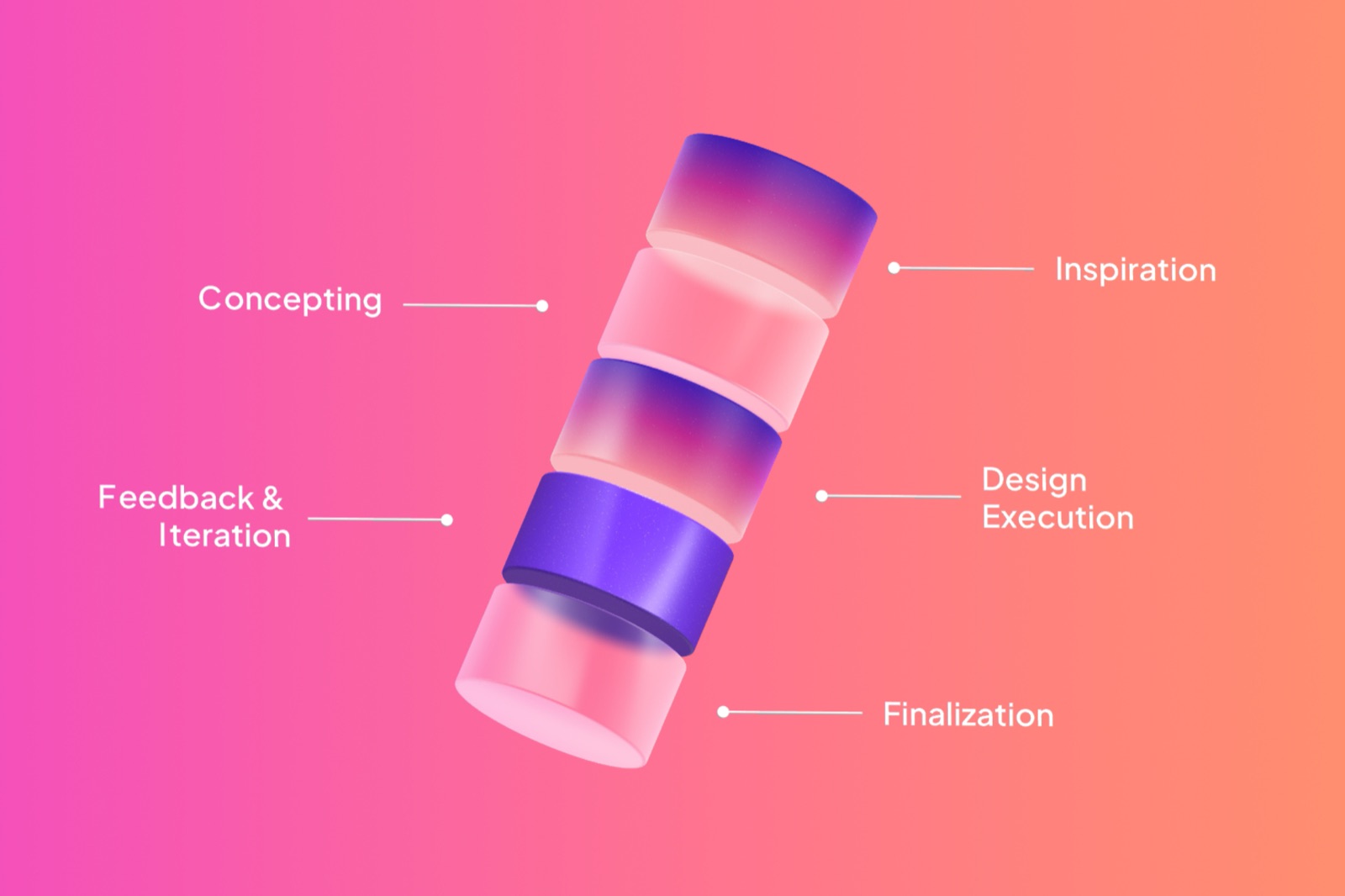
Discovery → Positioning → Design → Launch → Handover
The sequence is not there to make the project feel complicated.
It is there because the earlier decisions give the later ones something to respond to.
Brand strategy vs visual identity: what actually changes?
Brand strategy answers what the brand should mean, to whom, and why.
Visual identity answers how that strategy should be expressed visually and consistently. That's the brand identity design side of the work: turning a resolved position into a logo, colour and typography system, and the applications the business actually needs.
Brand strategy changes
- Who the business is trying to reach
- How the business is positioned
- What the business needs to be known for
- Which competitors or alternatives matter
- What existing brand equity should be kept
- What decisions the visual identity needs to support
Visual identity changes
- Logo and wordmark
- Typography
- Colour
- Graphic system
- Layout
- Image treatment
- Applications and touchpoints
A quick way to decide which one you need first:
Start with strategy if
- The audience is unclear
- The positioning is unsettled
- The offer has changed
- The business has entered a new market
- Competitors are difficult to distinguish from
- The team cannot agree what the brand should stand for
Start with visual identity if
- The positioning is already clear
- The audience is already understood
- The main problem is visual inconsistency
- The existing identity no longer reflects the business
- The system does not work consistently across current touchpoints